
How Does Mounjaro Work for Weight Management?
Mounjaro's active ingredient, tirzepatide, acts on two gut-hormone pathways that influence appetite, fullness and blood-sugar regulation. It supports — rather than replaces — nutrition, activity and clinical oversight, and individual responses vary.
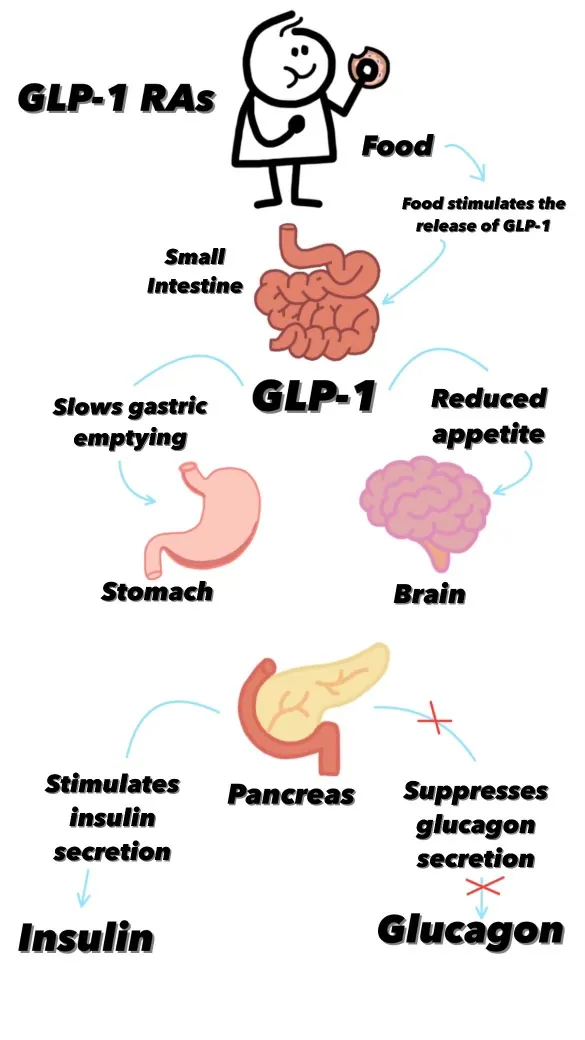
Tirzepatide, explained simply
Tirzepatide is the active ingredient in Mounjaro. It works with naturally occurring gut hormones that help the body regulate appetite and blood sugar, which is why it is used within medically supervised weight management.
After we eat, the gut releases hormones called incretins that help coordinate the body's response to food. Tirzepatide acts on two of these hormone pathways, known as GIP and GLP-1. By engaging both, it can influence the signals that tell the brain and digestive system how hungry or full you feel.
It helps to think of the medicine as adjusting signals the body already uses, rather than overriding them. That framing also explains why it is used alongside — not instead of — changes to eating patterns and daily activity.
Appetite and fullness signals
By acting on incretin pathways, tirzepatide can increase feelings of fullness and reduce appetite for some people, which may lower how much they eat across the day.
Signals the medicine can influence
Fullness
You may feel satisfied sooner and stay satisfied for longer, which can make it easier to eat smaller portions.
Appetite
A reduced drive to eat between meals can make everyday food choices feel less effortful for some people.
Blood-sugar regulation
The same pathways help the body respond to glucose in a way that depends on the body's current state.
These effects are described in general terms on purpose. How strongly any individual experiences them — and how that translates into results over time — cannot be predicted from an article, which is why ongoing clinical review matters.
Why individual responses vary
No two people are identical. Genetics, other health conditions, medicines, eating patterns, activity, sleep and stress all shape how someone responds, so outcomes differ even on the same approach.
Clinical trials report average results for groups of participants under controlled conditions. Averages are useful for understanding a medicine in general, but they are not a forecast for any single person. Some people respond more than the average, some less, and a minority may not find it suitable at all.
Averages are not promises
When you read a headline figure about weight loss, it describes a studied population, not your personal result. Treat it as context, not a target to expect.
The role of nutrition and activity
Medication works best as part of a wider plan. Nutrition, physical activity, sleep and other habits continue to influence health and results throughout treatment.
Because the medicine can reduce appetite, it becomes especially important to eat well rather than simply less — prioritising adequate protein, fibre, hydration and overall balance. Movement that you can sustain supports general health and helps preserve muscle as weight changes.
Eating well when appetite drops
- Build meals around balanced, nutrient-dense foods rather than only cutting quantity.
- Stay hydrated, particularly early in treatment when appetite may fall.
- Choose activity you can maintain, and discuss any new exercise plans with your clinician.
What tirzepatide does not do on its own
It is a tool that supports change rather than a substitute for it. Knowing its limits keeps expectations fair and the focus on a sustainable overall plan.
A medicine that gently changes appetite signals can make healthier choices feel easier, but it does not build habits for you, and it does not remove the need for regular medical review. Nor is it a treatment that suits everyone who is interested in it; suitability is always an individual judgement made with a clinician.
It is also not a quick fix with a fixed end date. Some people use treatment for a period and then review next steps, and some find it is not right for them at all. What the medicine can genuinely do is support a broader effort — the eating patterns, activity and monitoring that carry results over the longer term.
A tool, not a shortcut
The most durable progress tends to come when medication is paired with sustainable habits and honest clinical review, rather than treated as a standalone answer.
Why dose decisions belong to clinicians
How a medicine like this is used is a clinical decision made and reviewed by a licensed professional. It is not something to change independently based on how quickly the scale moves.
A clinician considers tolerance, side effects, your wider health and your response when managing treatment over time. Changing an approach without medical advice can increase the risk of side effects and does not reliably improve results. This article deliberately gives no dosing instructions, because that guidance has to be individual.
Never self-adjust
Do not increase, decrease or skip a prescribed treatment on your own. If something is not working as you expected, raise it at a review rather than changing course alone.
Monitoring during treatment
Regular review lets a clinician confirm the medicine is being tolerated, track how you are responding and adjust the plan if needed.
Monitoring typically focuses on how you feel, any side effects, and progress toward agreed goals. It is also the moment to revisit nutrition and activity, and to decide together whether to continue, pause or consider alternatives. Consistent follow-up is part of using the medicine responsibly, not an optional extra.
Follow-up also matters because the body and your circumstances can change over time. What works at one stage may need review at another, and effects that were mild early on — or that appear later — are easier to manage when there is a regular point of contact. Treating monitoring as a routine part of care, rather than something to arrange only when a problem arises, is one of the simplest ways to keep treatment safe and useful.
Sources
Medical disclaimer
This article provides general educational information and does not replace personalised medical advice. Mounjaro is a prescription medicine. Suitability, prescribing and monitoring decisions must be made by a licensed healthcare professional after an individual assessment.
Frequently asked questions
Does Mounjaro burn fat directly?
It is better understood as acting on appetite and fullness signals through gut-hormone pathways, which may reduce how much you eat. It works within a plan that includes nutrition and activity, not as a direct fat-burner.
Will it work the same way for me as for someone else?
Not necessarily. Responses vary widely because of genetics, health, other medicines and lifestyle. That is why treatment is supervised and reviewed individually rather than following a fixed template.
Do I still need to change how I eat and move?
Yes. Nutrition and sustainable activity remain central throughout treatment, and they become even more important if your appetite falls, so that meals stay balanced and nourishing.
Can I adjust my own dose to get faster results?
No. Dose decisions are made and reviewed by a licensed clinician. Self-adjusting can raise the risk of side effects without reliably improving outcomes.
Related articles

Mounjaro Injection in Dubai: What to Know Before Treatment
A calm, practical overview of what happens before Mounjaro treatment in Dubai — from the first consultation and suitability checks to realistic expectations and safe, regulated access.

Mounjaro Side Effects and Safety Considerations
A careful, non-alarming overview of common Mounjaro side effects, the contraindications worth discussing, and the warning signs that mean you should contact a clinician — or seek urgent care.